

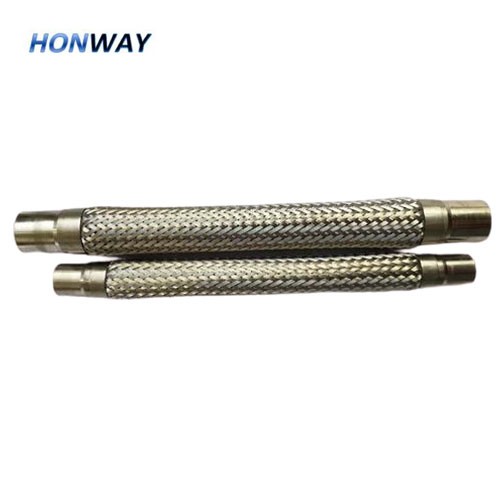
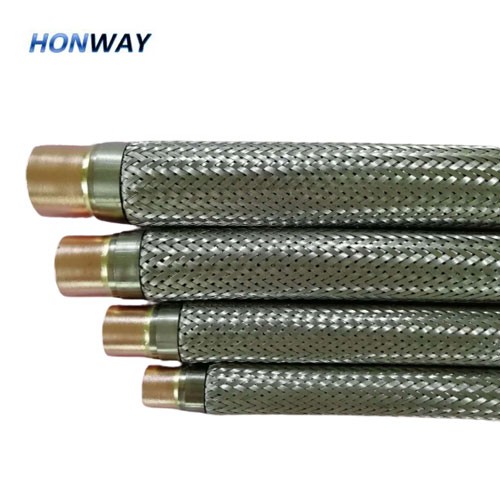
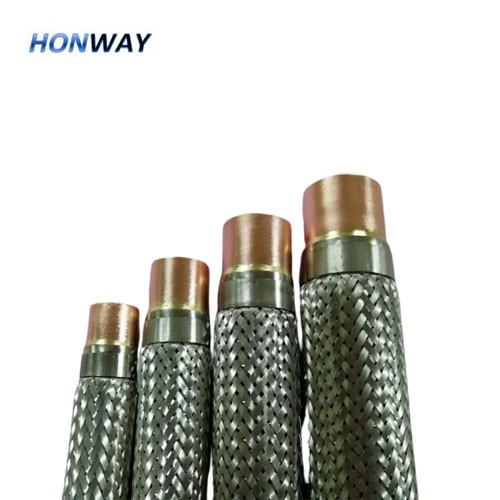
In my years on the factory floor and troubleshooting at project sites from Bangkok to Berlin, I’ve seen one recurring nightmare for HVAC engineers: a catastrophic refrigerant leak caused by a snapped pipe. More often than not, the culprit isn’t the compressor or the piping itself—it’s a poorly selected or incorrectly installed vibration absorber for refrigeration equipment.
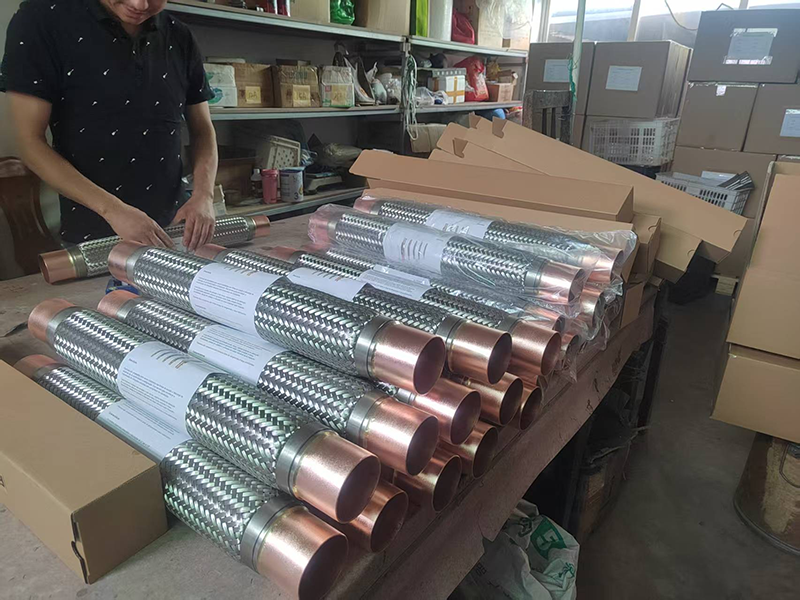
A vibration absorber for refrigeration equipment is a flexible, braided component designed to dampen mechanical vibrations from the compressor to prevent pipe fatigue and refrigerant leaks. It works by absorbing oscillations in the suction and discharge lines using a corrugated stainless steel core. To ensure long-term reliability, high-quality absorbers must use TIG welding, undergo helium leak testing, and be rated for pressures up to 650 PSI (45 bar) to handle modern refrigerants like R410A and CO2.
The Reality of the Field: Beyond the Spec Sheet
Honestly, this is where many buyers get confused. They look at a catalog, see a diameter that matches their pipe, and hit "buy." But on paper, two absorbers might look identical while performing worlds apart in a real machine room.
In real projects, we’ve seen vibration absorbers fail not because they were "cheap," but because they weren't engineered for the specific harmonic frequencies of modern inverter compressors. We’ve noticed that many apartment projects in Southeast Asia now prefer fingerprint smart locks—wait, that’s a different industry—but the logic is the same: managers want parts that reduce maintenance. In refrigeration, if your vibration absorber isn't handling the "torsional stress" during compressor start-up, it’s basically a ticking time bomb.
Technical Deep-Dive: The "All SS" Advantage
Most standard absorbers use copper ends brazed to a stainless body. Here’s the problem: when you have dissimilar metals, you invite galvanic corrosion, especially in humid or coastal environments.
What many buyers overlook is the transition point. At Honway, we’ve pioneered the All SS Vibration Absorber. By using 304 or 316L stainless steel for the entire assembly—bellows, braid, and ferrules—we eliminate the weak brazed joint. We use TIG (Tungsten Inert Gas) welding, which creates a molecular bond. If you’re running a CO2 (R744) system with discharge temperatures hitting 150°C, a traditional copper-brazed joint is a liability you can't afford.
Engineering Specs You Actually Need
Operating Pressure: Don't just look at the working pressure. Look at the burst pressure. A 4:1 safety factor is our standard.
Temperature Range: -40°C to +150°C. If your absorber gets brittle at low temperatures, the vibration will crack it.
Leak Rate: We test to 1×10⁻⁷mbar.l/s using helium. If your supplier isn't using helium, they aren't finding the microscopic pores that leak over six months.
FAQ Section
Q: Can I install a vibration absorber vertically?
Yes, but it's not ideal. To get the best dampening, you should install it parallel to the compressor crankshaft. If you must go vertical, ensure it’s not supporting the weight of the pipe.
Q: Why does my absorber make a whistling sound?
This is usually caused by high gas velocity. If the internal diameter is too small for the flow, you get "vortex shedding." You might need to upsize or use a unit with an internal liner.
Q: Is "All SS" really necessary for indoor units?
If the unit is in a controlled, dry environment, standard copper-ends are fine. But if there’s any risk of chemical cleaning agents or moisture, an All SS vibration absorber is the better insurance policy.
Q: How do I know if the TIG weld is good?
Look for a consistent "fish-scale" pattern. If the weld looks chunky or discolored (burnt), the metal’s integrity has been compromised.
Q: Can these be used for R744 (CO2) systems?
Only if they are rated for the pressure. Our CO2-specific lines are built to handle the 120+ bar peaks of transcritical cycles.
Don't let a few part ruin a $20,000 compressor. Whether you are an OEM or a maintenance lead, choosing a refrigeration vibration absorber with proven fatigue resistance and superior welding is the only way to sleep soundly at night.