
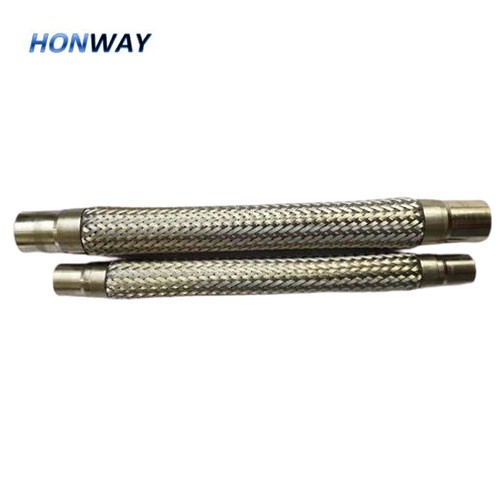
As the focus on eco-friendly refrigerants grows across sectors—including commercial freezers, convenience store refrigeration, the food cold chain, industrial cooling, and heat pump systems—CO2 refrigeration systems are increasingly being adopted by equipment manufacturers and project engineers. While CO2 offers the advantage of a low Global Warming Potential (GWP) as a natural refrigerant, it introduces engineering challenges that cannot be ignored: higher operating pressures, more frequent compressor start-stop cycles, and an increased tendency for pipeline vibrations and shocks to be amplified. For procurement professionals, contractors, and equipment manufacturers, ensuring the stable operation of CO2 systems involves more than just selecting compressors and valves; components such as pipeline connectors, vibration absorbers, and sealing structures are equally critical to the system's overall service life.
Vibration issues are already common in traditional HFC or HFO refrigeration systems. Mechanical vibrations generated during compressor operation travel through copper or stainless steel piping to condensers, evaporators, mounting brackets, and cabinet structures. Issues such as compact piping layouts, numerous weld points, or poorly spaced fixing points can lead to the accumulation of localized stress over time. In CO2 systems, addressing this issue proactively is even more crucial. The high-pressure ratings, temperature fluctuations, and varying operating conditions of CO2 systems place greater demands on the fatigue strength of connection points. A poorly designed flexible connector might show no immediate issues but can become the root cause of leaks, noise, and warranty claims months or even years later.
Industry Pain Point 1: Under high-pressure conditions, even minor vibrations can lead to long-term fatigue.
When users search for terms like "CO2 vibration absorber," "refrigeration shock absorber," or "anti-vibration flexible hose," their primary concern is often not the price of a single part, but rather its ability to withstand system pressure, handle high-frequency vibrations, and maintain a seal amidst temperature fluctuations. CO2 refrigeration systems impose stricter requirements on pipeline connectors—particularly at compressor outlets, integrated unit piping, condensing units, and within the confined spaces of cabinets—where vibration absorption capabilities directly impact the reliability of weld points, joints, and adjacent components.
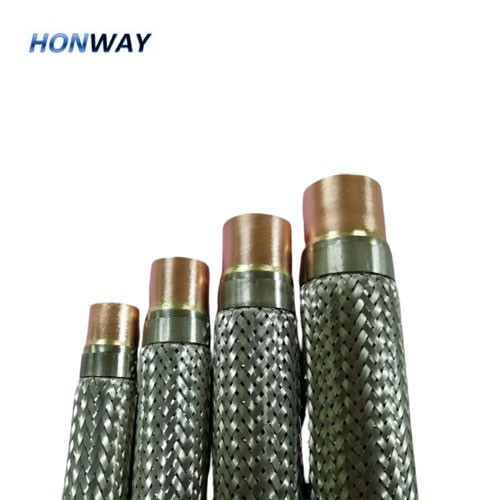
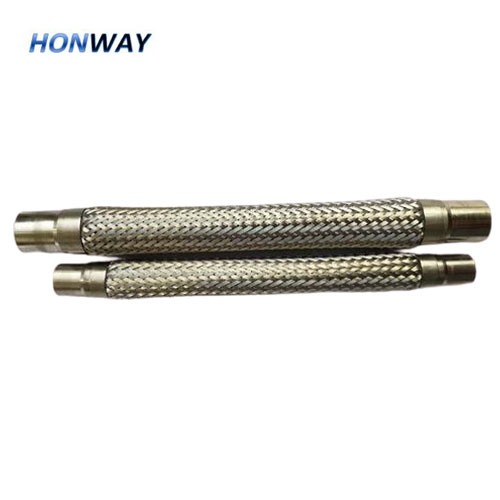
Professional CO2 vibration absorbers typically utilize a stainless steel bellows to absorb axial, lateral, and angular micro-displacements, while an external braided layer enhances pressure-bearing capacity and structural stability. Unlike standard flexible hoses, the value of an All SS Vibration Absorber lies in striking a balance between flexibility and strength; insufficient flexibility allows vibration transmission to persist, whereas insufficient strength creates risks during pressure cycling. For equipment manufacturers, these products are essentially reliability-critical components rather than mere piping accessories.
Industry Pain Point #2: Noise complaints are impacting the end-user experience
Supermarkets, convenience stores, commercial kitchens, cold storage facilities, and urban commercial buildings are becoming increasingly sensitive to noise. Many end customers do not distinguish between noise caused by compressors, fans, or piping resonance; they simply attribute "loud equipment" to a poor brand experience. Once refrigeration equipment is installed on-site, addressing vibration-related noise incurs significantly higher costs than optimizing the design prior to factory shipment. Consequently, an increasing number of OEMs are incorporating vibration absorbers or eliminators during the design phase to isolate compressor vibration at the source.
Due to significant fluctuations in operating pressure and conditions, CO2 systems can generate audible noise from vibration and pressure pulsations. This is particularly true when metal piping passes through cabinets, brackets, or walls; without effective flexible connections, sound propagates through the structure. Utilizing braided hose vibration absorbers or refrigeration hose shock absorbers helps mitigate vibration transmission and reduces noise complaints caused by resonance. For end-user operators, this translates to a quieter equipment experience; for equipment brands, it means fewer after-sales issues and a more stable reputation.
Industry Pain Point #3: Leakage risks impact both cooling performance and project profitability
Refrigerant leaks lead to reduced cooling efficiency, system shutdowns due to safety protections, and increased maintenance costs; in severe cases, they can prevent the entire system from operating as planned. Leakage control is particularly critical in CO2 systems. Given the high operating pressures involved, connection points, weld joints, and hose end assemblies require a higher level of consistency and reliability.
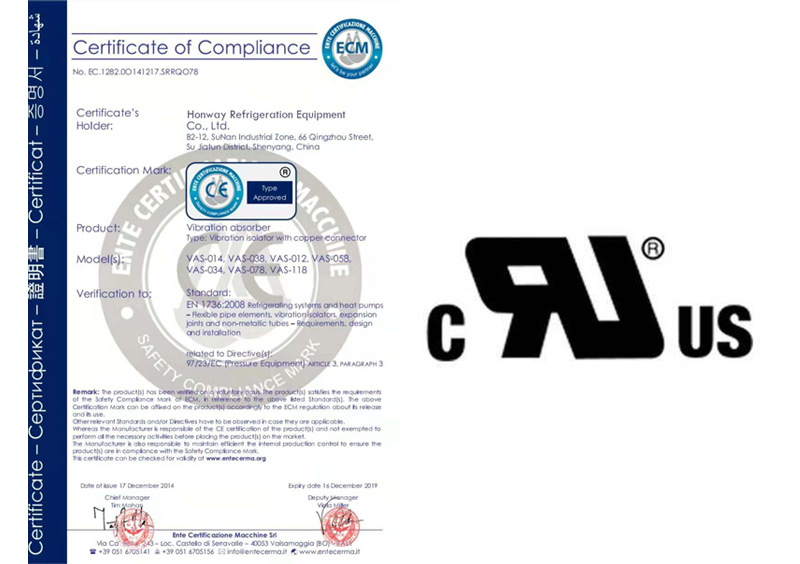
When sourcing CO2 All SS Vibration Absorbers, buyers frequently search for terms such as "leak test," "helium test," "hydraulic test," "UL," and "CE," indicating a growing market focus on testing and certification. HONWAY’s products perfectly meet these requirements.
HONWAY’s all-stainless-steel vibration absorbers for CO2 systems feature stainless steel bellows, high-strength braiding, TIG-welded stainless steel ferrules, and high-pressure crimping, alongside helium leak testing and hydrostatic pressure testing. These specifications are crucial for purchasing decisions as they address key customer concerns: joint integrity, welding reliability, seal verification, and suitability for mass-market applications. For export markets, UL and CE certifications also help reduce the costs associated with compliance-related communication.
Why can't standard hoses simply replace CO2 vibration absorbers?
While standard hoses offer flexibility, they may lack the pressure ratings, temperature adaptability, and fatigue life required for CO2 systems. CO2 refrigeration system designs must account for maximum operating pressure, operating temperature, connection methods, installation angles, bending radii, vibration source locations, and piping support methods. Using an incompatible flexible connector might allow for installation on the surface, but it can actually expose the system to hidden risks. Specialized refrigeration shock absorbers are engineered specifically for refrigeration piping environments, rather than for general fluid transfer.
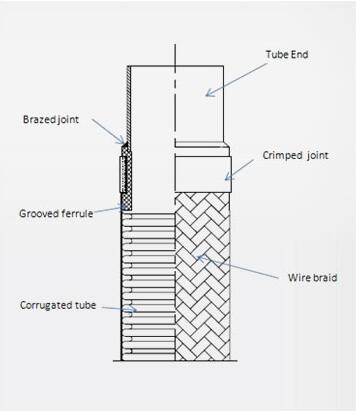
A qualified CO2 vibration absorber requires a robust structural design: internal bellows to absorb displacement, an external metal braid for added strength, end fittings for reliable assembly, and welding and crimping processes to ensure overall sealing and tensile strength. For refrigeration systems subject to frequent start-stop cycles or long-term operation, material quality, manufacturing processes, and rigorous testing are all essential. If purchasing decisions are based solely on price while ignoring testing standards and product suitability, the subsequent costs of system downtime could far exceed any savings on the parts themselves. HONWAY’s Product Positioning: Specialized Vibration Dampening Solutions for Refrigeration Systems
HONWAY’s official website showcases a product range that includes vibration absorbers, vibration eliminators, flexible hoses, flexible connections, corrugated tubes, wire-braided hoses, and anti-vibration piping. This demonstrates that the company offers more than just simple hoses; it has developed a comprehensive product line centered on refrigeration connections, vibration dampening, and flexible piping. For customers sourcing multiple refrigeration components, this diverse portfolio streamlines communication and simplifies the process of matching specifications within a single supply chain.
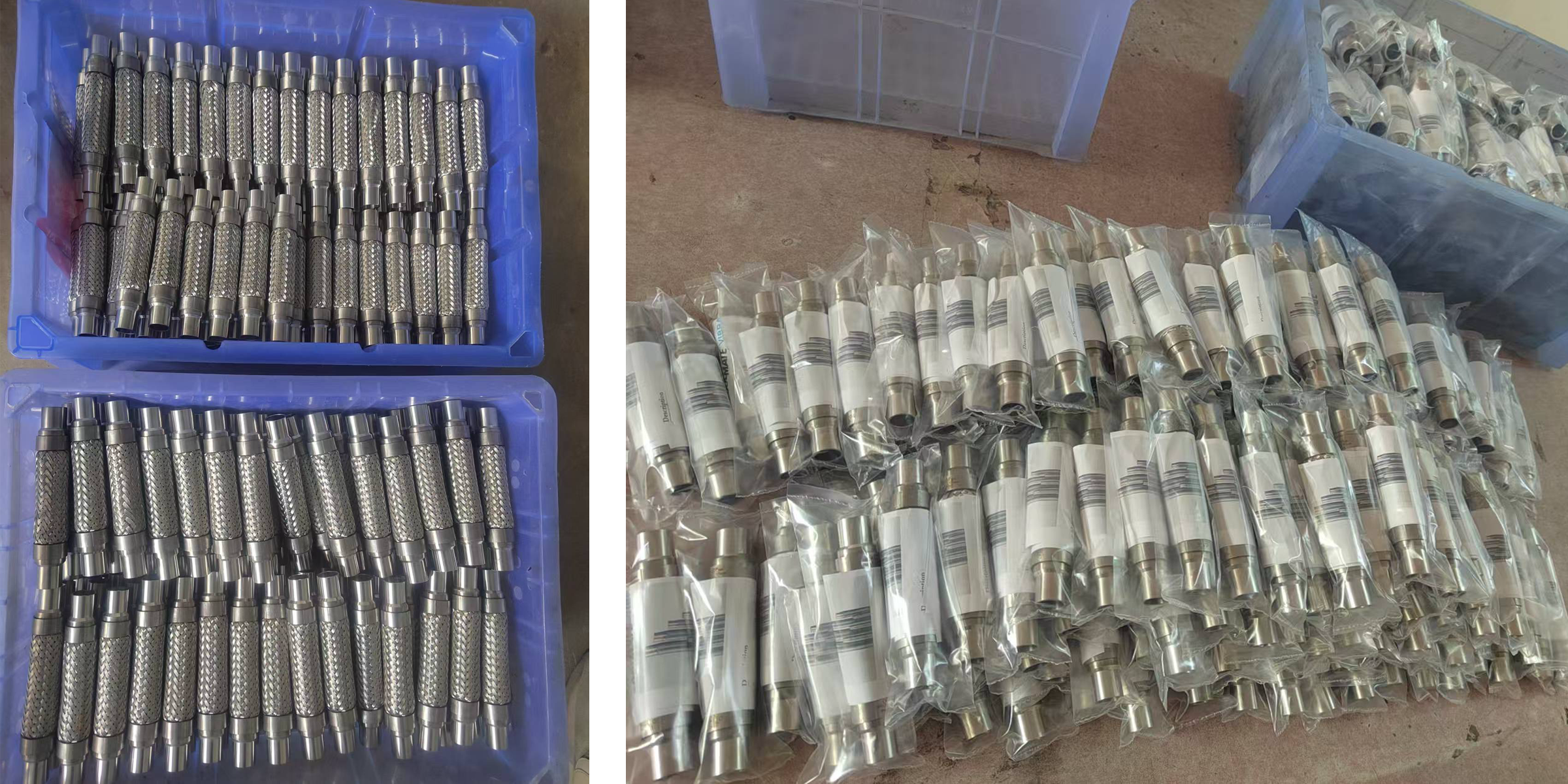
For CO2 applications, HONWAY’s All SS Vibration Absorbers are ideal for critical locations requiring vibration resistance, high-pressure tolerance, and reliable sealing. Product listings feature the HONWAY brands; manufactured in China, these products offer a 2–4 week lead time and a production capacity of 1,000 units per day. Such details are particularly valuable to international buyers and OEM clients, who prioritize not only sample quality but also bulk delivery capabilities and supply continuity.
Advice for Procurement Professionals and Engineers
When selecting vibration absorbers for CO2 refrigeration units, condensing units, commercial freezers, or cold chain systems, it is recommended to evaluate them across four dimensions: suitability of pressure and temperature ranges for the specific system; material and structural durability against long-term vibration fatigue; compatibility of end connections with the piping design; and the supplier's ability to provide consistent testing, certifications, and bulk delivery. Although vibration absorbers may appear to be minor components, in high-pressure refrigeration systems, they play a vital role in mitigating vibration transmission, protecting connection points, and enhancing overall system stability.
The adoption of CO2 refrigeration systems reflects the industry's growing commitment to environmental sustainability; however, eco-friendly systems still require a robust engineering foundation. Specialized CO2 vibration absorbers help minimize vibration, noise, and leakage risks right from the design stage. For customers seeking refrigeration shock absorbers, braided vibration-dampening hoses, or all-stainless-steel vibration absorbers, HONWAY offers tailored product options and manufacturing support—ensuring quieter, more stable system operation and greater confidence in project delivery.