
Installation Mistakes That Kill Your Vibration Absorber
Most vibration absorber for refrigeration equipment failures are not caused by the manufacturer. They are killed by the installer. I’ve walked onto job sites where the absorber was bent like a pretzel or stretched to its limit.
To properly install a refrigeration vibration absorber, it must be placed as close to the compressor as possible, aligned parallel to the crankshaft. It should never be stretched, compressed, or twisted during installation. Use a wet rag to protect the joints during brazing and ensure the piping is anchored immediately after the absorber to isolate the vibration effectively.
The "Torsion" Trap
Here’s the thing. Stainless steel bellows are amazing at handling movement in one or two planes, but they hate torsion (twisting).
In real projects, I’ve seen technicians use a huge pipe wrench to tighten a fitting, twisting the vibration absorber in the process. The moment you twist those bellows, you create internal stress that will lead to a fatigue crack. Honestly, this is where many buyers get frustrated because the product fails after just 100 hours of run-time. It wasn't a bad part; it was a bad installation.
Engineering Wisdom: The 3 Golden Rules
Alignment is Everything: If you have to pull the pipe to make it meet the absorber, you’ve already failed. The absorber should slip into place with zero force.
Heat Management: If you’re using a copper-end absorber, you’re brazing. If that heat travels too far into the bellows, you’ll damage the temper of the stainless steel. Always use a heat-sink or a wet rag.
The Anchor Point: A vibration absorber doesn't "disappear" the vibration; it isolates it. You must have a solid pipe hanger after the absorber to prevent the vibration from traveling down the rest of the line.
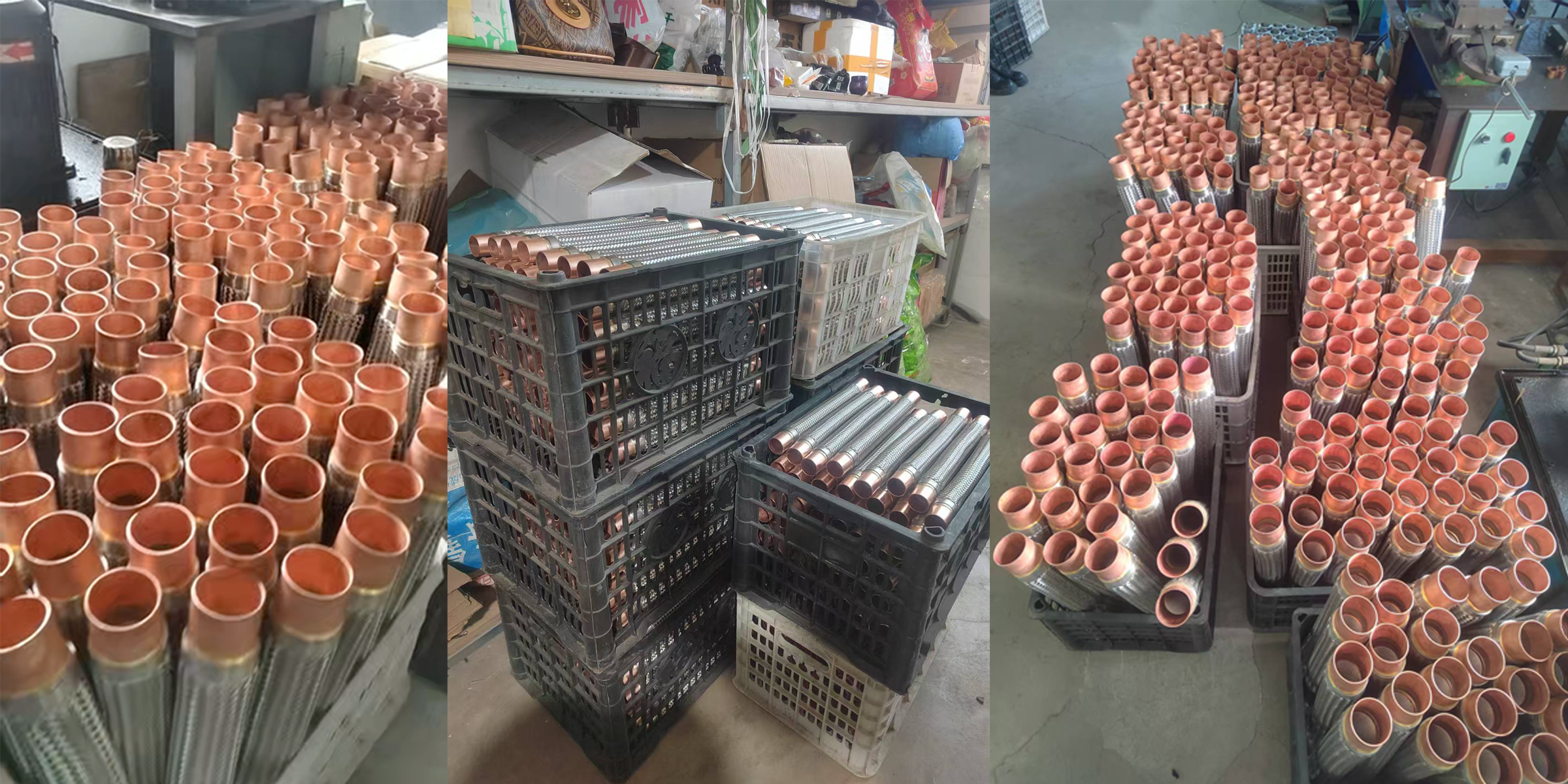
Honway’s Packaging Engineering
We’ve seen leakage issues appear after long-distance shipping vibration tests because the absorbers were banging against each other in a box. That’s why we use individual compartments and protective sleeves. When a Honway part arrives at your site, the bellows are as pristine as the day they were formed.
FAQ Section
Q: Can I use a vibration absorber to fix a pipe misalignment?
No! That is the fastest way to break it. Use an elbow for misalignment; use an absorber for vibration.
Q: How do I know if I need one on both the suction and discharge lines?
Ideally, yes. The discharge line has higher pressure and temperature pulses, while the suction line is more prone to low-frequency shaking.
Q: What happens if I install it too far from the compressor?
The further away it is, the more likely the pipe itself will start to vibrate at its resonant frequency, rendering the absorber useless.
Q: Can I paint the vibration absorber?
We don't recommend it. Paint can get between the braid wires and harden, reducing the flexibility of the unit.
Q: Do these need regular maintenance?
Just a visual check. Look for "fretting" (wear marks) on the braid or any signs of oily residue, which indicates a microscopic leak.
Installing a refrigeration vibration absorber is a precision task. If you treat it like a flexible rubber hose, it will fail. Treat it like a piece of precision metal engineering, and it will outlast the compressor.