
The B2B Guide to Sourcing All SS Vibration Absorbers
When a procurement manager looks at a quote for an All SS Vibration Absorber, the first question is always: "Why is this 15% more expensive than the copper-end version?" As an engineer, my answer is simple: How much does it cost you to send a technician to a remote site to fix a leak and recharge 50kg of refrigerant?
An All SS Vibration Absorber (All Stainless Steel) is a premium refrigeration component where the bellows, braiding, and end-connectors are all made of stainless steel, joined by TIG welding. It is preferred over copper-end versions for its superior corrosion resistance, higher pressure ratings (essential for CO2 systems), and ability to withstand extreme temperatures without joint degradation.
This is Where Things Get Tricky
In real projects, we've seen leakage issues appear only after international shipping vibration tests. A standard absorber might pass a factory leak test, but the brazed joint between the stainless braid and the copper ferrule is a "stress riser." During shipping or high-intensity operation, that joint can develop hairline fractures.
We’ve noticed that high-end medical chillers and marine refrigeration systems are moving exclusively to Stainless Vibration Absorbers. Why? Because salt spray eats copper for breakfast. If your equipment is sitting on a rooftop near the ocean, a standard absorber will look like a green, corroded mess in less than two years.
OEM Manufacturing: The Honway Process
Most factories buy their bellows from one place and their braid from another. We don't. At Honway, we control the pitch of the corrugated tube. A tighter pitch means more flexibility.
The Braid Factor: Our braid coverage is over 90%. If you can see the bellows through the braid, the braid isn't doing its job of protecting against internal pressure.
The Welding Secret: We use automated TIG welding. Human error is the #1 cause of weld failure. Our machines ensure that every All SS Vibration Absorber has the same penetration depth and strength.
In food processing, you use harsh chemicals to wash down equipment. These chemicals are often acidic or highly alkaline. Copper reacts. Stainless steel doesn't. We’ve seen entire cold rooms shut down because a cleaning crew accidentally sprayed the refrigeration lines with a corrosive degreaser. Switching to an all-stainless setup eliminates this risk entirely.
FAQ Section
Q: Does an All SS absorber require a different welding rod during installation?
Yes. Since you are likely connecting it to stainless or copper piping, you’ll need a filler rod compatible with the base metals (like 309L for SS-to-Copper).
Q: Can Honway provide custom lengths?
Absolutely. In fact, most of our OEM business is custom. In a compact chiller, every millimeter counts.
Q: What’s the shelf life of these components?
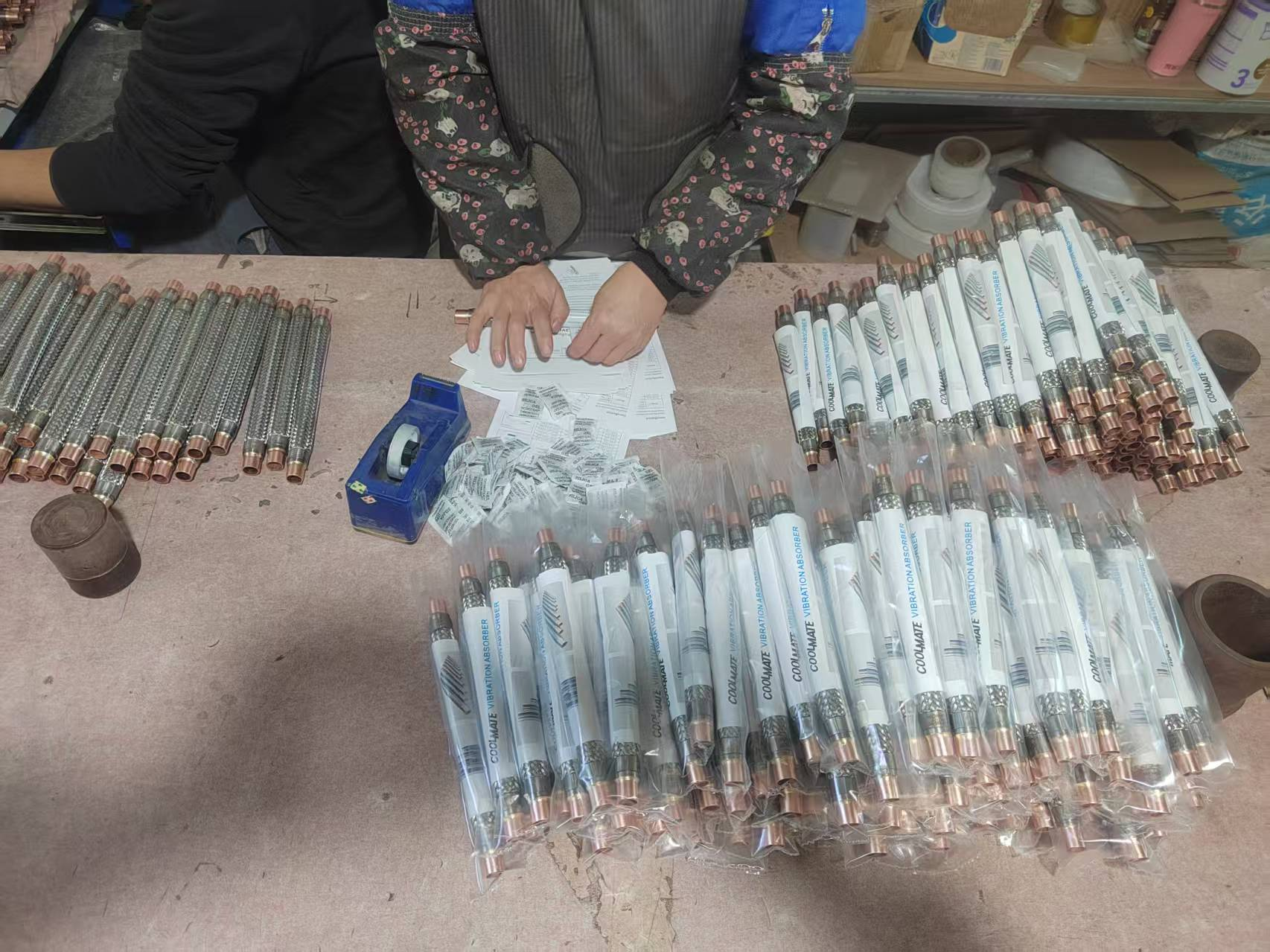
If stored in their original Honway packaging (vacuum sealed), they can last years. The key is preventing dust and moisture from entering the bellows.
Q: Why do some absorbers fail under high pressure?
Usually, it's "squirm." If the braid isn't tight enough, the bellows will try to snake out from under it. Our double-braided options prevent this.
Q: Is 316L always better than 304?
For most applications, 304 is great. 316L is only necessary if you have high chloride (salt) exposure.
The shift toward refrigeration vibration absorbers made entirely of stainless steel isn't just a trend; it's a response to higher system pressures and harsher environments. It’s an investment in your brand’s reputation for reliability.
<<Next:Installation Mistakes That Kill Your Vibration Absorber