

When purchasing refrigeration components, vibration absorbers are often treated as standard parts—ordered simply by confirming connection size, length, and quantity. However, in CO2 refrigeration systems, this approach can overlook critical risks. The operating pressures, pressure pulsations, start-stop frequencies, and temperature fluctuations inherent in CO2 systems place higher demands on the flexible connection structure. A vibration absorber truly suitable for CO2 applications—specifically an all-stainless steel (All SS) model—must do more than just connect piping; it must absorb compressor vibrations during long-term operation, minimize fatigue at weld points, reduce noise transmission, and maintain a stable seal under high-pressure conditions.
Fundamentally, buyers want to address three key concerns: Will the product leak? Can it withstand pressure over the long term? Is the supplier reliable? The following seven checkpoints serve as a practical list for buyers, contractors, and OEM design engineers.
1. Confirm working pressure, not just physical dimensions
The most significant difference between CO2 refrigeration systems and conventional ones is the operating pressure. When purchasing, one cannot determine suitability based solely on pipe diameter, total length, and connection type; it is essential to verify the maximum working pressure, test pressure, and specific application scenario. HONWAY’s CO2 vibration absorbers are designed for high-pressure refrigeration applications and undergo hydrostatic testing. For high-pressure systems, hydrostatic testing verifies structural pressure-bearing capacity and is a crucial piece of data to review during the procurement process.
Buyers should exercise caution if a supplier cannot clearly specify the pressure range or provides only generic specifications for flexible hoses. In CO2 systems, the failure of a flexible connection affects more than just a single component; it can lead to refrigerant leaks, system downtime, and costly after-sales repairs. Consistency is paramount—especially for export projects and OEM mass production—where product uniformity matters more than the quality of a single sample. When selecting an All SS vibration absorber, buyers should require suppliers to clearly state the design pressure, testing standards, and applicable operating conditions.
2. Confirm the temperature range to cover both low-temperature and hot-side fluctuations
Refrigeration systems experience significant temperature variations, and CO2 applications often involve even greater temperature disparities depending on the component's location within the system. Product page screenshots indicate an operating temperature range spanning from low to high extremes—a critical factor for refrigeration applications. Temperature fluctuations impact the fatigue characteristics of metal materials, sealing structures, and the long-term reliability of welded joints. When selecting components, buyers should verify temperature requirements based on the specific installation location; for instance, components near the compressor discharge side face different environmental conditions than those on the low-temperature suction side.
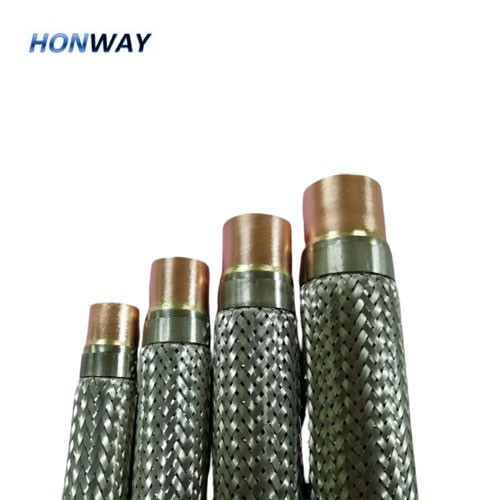
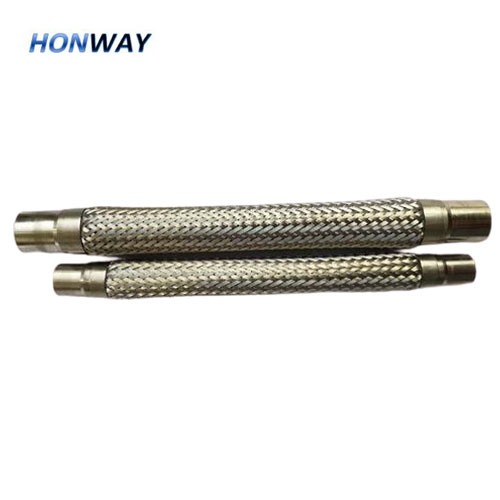
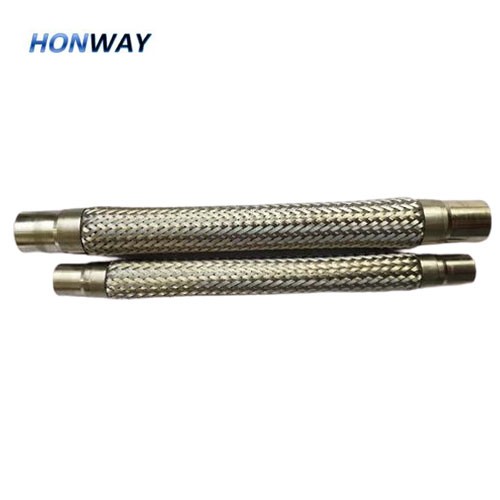
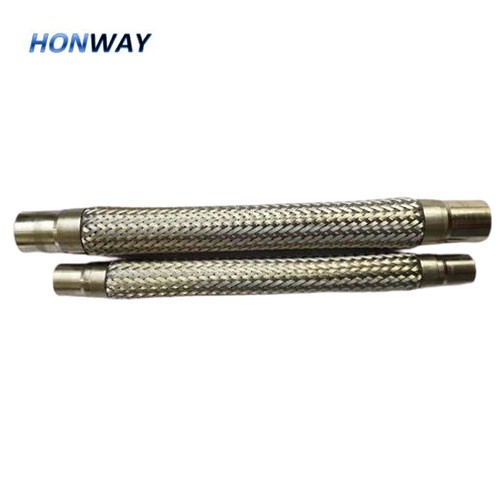
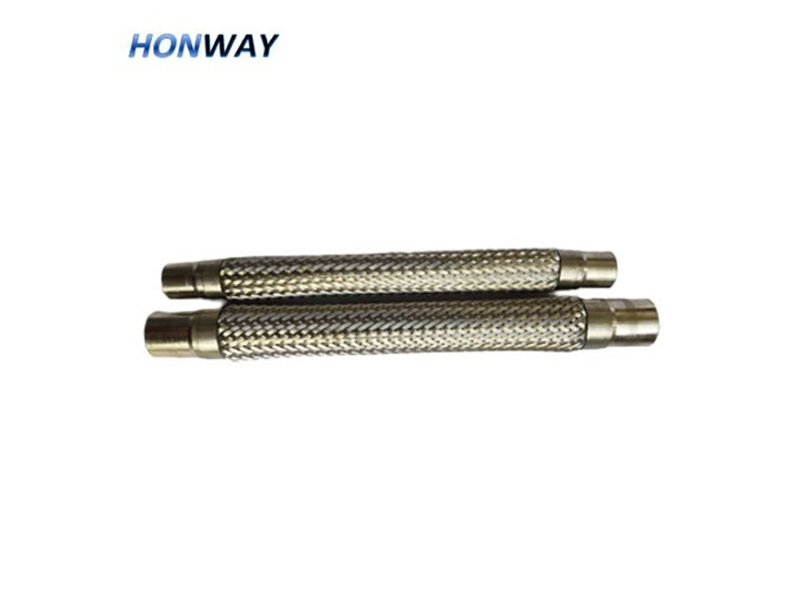
For commercial refrigeration equipment requiring long-term operation, it is advisable not to judge quality solely by appearance or flexibility at ambient temperatures. A genuine refrigeration vibration absorber must maintain stability across low temperatures, high temperatures, and pressure fluctuations. HONWAY products utilize stainless steel bellows and high-strength braided layers; this structural design balances flexibility with strength, making them ideally suited for vibration absorption in refrigeration systems.
3. Focus on Materials: The Combination of Stainless Steel Bellows and Braided Layers
The "SS" in "All SS Vibration Absorber" typically denotes a stainless steel construction. Stainless steel offers advantages in corrosion resistance, strength, and temperature adaptability, making it particularly suitable for refrigeration piping that demands high stability. The internal corrugated tube absorbs minor displacements and vibrations, while the external wire braid provides enhanced protection and pressure-bearing capacity. This combination results in a component that is neither a completely rigid metal pipe nor a standard hose lacking pressure resistance, but rather a flexible connector engineered for vibration control.
Buyers should pay attention to the consistency of materials used for the bellows pitch, braid tightness, end ferrules, and fittings. Mixing incompatible materials can lead to issues such as electrochemical corrosion or unstable welds. For CO2 systems, the end structure is particularly critical, as many failures occur not in the middle of the pipe body, but at welding, clamping, or connection transition zones. HONWAY’s vibration absorbers feature stainless steel ferrules, TIG welding, and high-pressure clamping processes—details that demonstrate a design focus on end-connection stability.
4. Examine Welding and Clamping Processes
A high-quality vibration absorber requires not only suitable materials but also stable manufacturing processes. TIG welding is widely used for joining stainless steel components, ensuring consistent weld quality. High-pressure clamping ensures a secure bond between the braided layer and the end structure. For components subjected to frequent vibration and pressure cycling, the quality of welding and clamping processes determines the product's ability to withstand long-term fatigue. When evaluating suppliers, buyers can request product images, cross-sectional details, test reports, or sample verification. Issues such as rough weld seams, loose braiding, or inconsistent end-fitting construction—even at a lower price point—can lead to post-sales risks during mass application. For OEM clients seeking long-term partnerships, it is advisable to include welding consistency and end-processing quality in the supplier audit process.
5. Confirming Leak Testing: The Significance of Helium and Hydraulic Tests
Leak testing is a critical step in the procurement of CO2 vibration absorbers. Users prioritize helium leak tests and hydraulic tests because they verify sealing integrity and pressure resistance, respectively. Helium testing detects minute leaks, while hydraulic testing validates structural reliability under pressure. Every HONWAY CO2 vibration absorber undergoes both tests—a key selling point for buyers aiming to minimize quality risks.
In news content or product pages, it is recommended to clearly outline the testing process rather than simply stating "quality guaranteed." Buyers prefer to see specific test names, objectives, and explanations of how the product mitigates leak risks. This approach enhances credibility and captures search traffic for terms such as "leak-tested vibration absorber," "helium-tested refrigeration hose," and "hydraulic-tested CO2 absorber."
6. Checking Certifications and Export Capabilities
For export markets, UL and CE compliance are key factors for buyers. While certification requirements vary by project, such information helps buyers quickly determine product suitability for their target markets. Highlighting HONWAY’s UL and CE compliance in press releases, product pages, and inquiry responses is essential. For customers in Europe and the Americas, certifications are not merely marketing talking points but critical screening criteria in the procurement process.
Export buyers also consider packaging, lead times, branding, country of origin, and supply continuity. HONWAY offers more than just sample supply; it possesses the capacity for mass production and project-specific support.
7. Choosing a Supplier with a Comprehensive Refrigeration Component Portfolio
Refrigeration systems require various types of flexible connections and vibration-dampening solutions. Compared to single-product suppliers, manufacturers with a comprehensive product line can more easily assist customers with specification matching and reduce the need for repetitive communication. HONWAY’s website showcases a wide range of refrigeration piping products, allowing OEM clients and engineering procurement teams to select and combine components to meet their specific needs. To address concerns regarding product suitability or quality, we also provide individual units for practical operational or installation testing.
Ultimately, the criteria for selecting a CO2 vibration absorber can be summarized in one principle: ensuring that product design, testing standards, certifications, and supply capabilities align with actual refrigeration operating conditions. While price is certainly important, stability is often the decisive factor in the total cost of ownership for high-pressure refrigeration systems. For buyers seeking all-stainless steel vibration absorbers, HONWAY ensures system stability through robust stainless steel construction, advanced welding and clamping processes, rigorous leak testing, and reliable volume production capabilities.